1. What are intangible assets?
2. What intangible assets can be valued?
3. What is meant by value and how to choose the appropriate method?
4. What methods are used to value them?
5. Documentation and framing in Argentina
6. Why is it important to value intangible assets?
7. Practical example: Valuation of a brand with Relief-from-Royalty
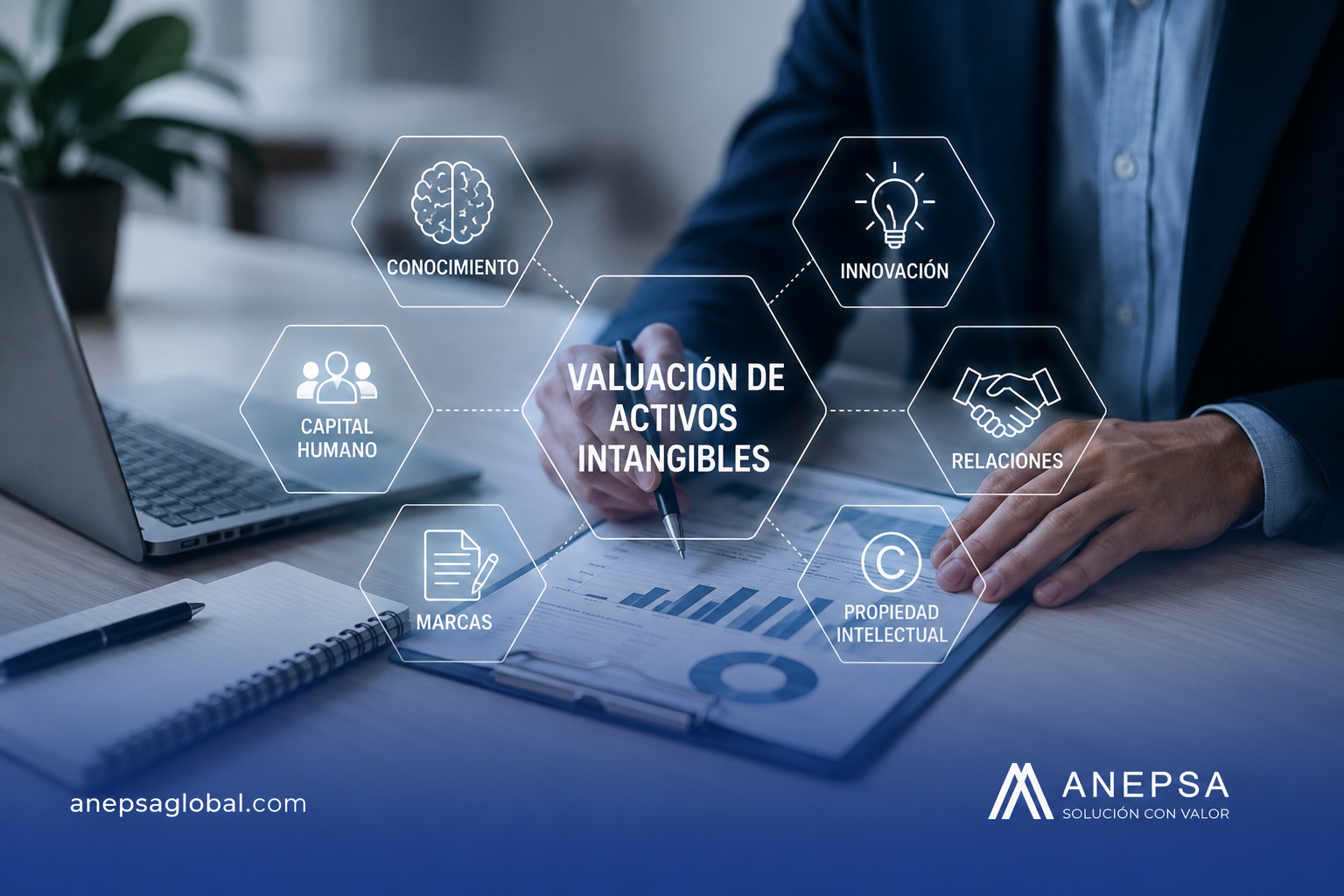
Today, a significant portion of a company's value lies not in its physical assets, but in intangible assets that nonetheless generate tangible results. A well-positioned brand, proprietary software, a patent, a license, a database, a valuable contract, or a technological development can decisively influence a business's value, its growth potential, and how it presents itself to the public.
In Argentina, this topic is gaining increasing importance in reorganizations, investor inflows, audits, technology transfers, licensing agreements, related-party transactions, and estate planning processes. Therefore, valuing intangible assets is not simply about assigning a number, but about precisely identifying what asset exists, how it generates benefits, its legal basis, and what method allows for a well-founded valuation.
An intangible asset is a resource that lacks physical substance but can contribute economic value to the business. In technical terms, it is an identifiable, non-monetary asset without physical substance. This identifiability exists when the asset can be separated, sold, transferred, or licensed, or when it arises from legal or contractual rights.
Put simply, an intangible asset is anything that can generate future benefits without being a physical asset, provided there is a reasonable basis for identifying and linking it to those benefits. Therefore, not everything valuable within a company automatically qualifies as an intangible asset. The overall reputation of the business or certain internal synergies may have value, but they are not always identifiable, independent assets.
Within a company, various types of intangible assets can be valued, provided there is sufficient basis for identifying them and analyzing their economic contribution. Among the most common are trademarks and trade names, software, patents, licenses, franchises, databases, know-how, customer portfolios, contracts, business relationships, non-compete agreements, and certain unpatented technology.
This classification is useful because not all intangible assets generate value in the same way. A brand can be linked to sales and positioning; a customer base, to retention and repeat business; software, to licensing, efficiency, or scalability; and a patent, to exclusivity or technological potential. This difference is what subsequently determines the valuation method.
When valuing an intangible asset, the first step is not choosing a formula, but defining what type of value is being estimated. In many studies, the central concept is fair value, defined as the price that would be received to sell an asset in an orderly transaction between market participants at the measurement date.
From a more commercial perspective, one can also speak of market value or value to a specific investor. This distinction is crucial for intangible assets, because a brand, software, or technology can be worth different amounts depending on who buys them, how they are used, and what synergies they expect to capture. Therefore, in this field, it's not enough to simply say, "This asset is worth this much." First, it's necessary to clarify the purpose of the valuation and the target investor.
Regarding the choice of method, there is no single best method for all intangible assets. The decision depends on the type of asset, the purpose of the work, the availability of information, the asset's useful life, the competitive environment, the level of legal protection, and the specific way in which that asset generates value.
Simply put: first, you need to understand what asset is being valued, how it generates value, and what evidence exists. Only then does it make sense to decide whether to work with a market, income, or cost approach, or even combine more than one approach to reach a better-supported conclusion.
There are three widely recognized approaches to measuring the value of an intangible asset: market, revenue, and cost. Each is based on a different logic and is more appropriate depending on the type of asset and the information available.
Market focus
The market approach seeks to estimate the value of an intangible asset based on comparable transactions, licensing agreements, observable royalties, or benchmarks of similar assets. In theory, it is a very powerful approach because it connects value to actual market behavior. The problem is that for intangible assets, truly homogeneous comparables often do not exist, or there are no publicly available transactions with sufficient information. Therefore, it usually works better as a method of comparison or calibration than as the sole basis for determining value.
Income approach
The revenue approach is based on a central idea: the value of an intangible asset depends on the economic benefits it is expected to generate in the future. This is the most common approach for intangible assets when those benefits can be reasonably projected. Methods within this group include discounted cash flow, relief-from-royalty, with-and-without, and MPEEM. This approach is often particularly useful for brands, customer portfolios, licenses, patents, and software that clearly impact revenue, margins, or cost savings.
Cost approach
The cost approach is based on a different logic: what would it cost today to reproduce or replace the asset's economic utility? It is often particularly useful when the asset lacks an observable market or clear attributable cash flows, but the cost of redeveloping it or replacing its service capacity can be estimated. In practice, this approach is frequently seen with internal software, proprietary developments, certain databases, and some assets whose value is more closely tied to their operational function than to their licensing or sale.
In intangible assets, a good valuation depends not only on the method but also on the quality of the supporting documentation. To work responsibly, it is usually necessary to gather evidence of ownership, certificates or registration documents, assignment or license agreements, proof of economic use, commercial and financial information, and, in the case of technological assets, sufficient technical documentation to define the asset.
In Argentina, registration is also important. The transfer of a trademark must be registered to be enforceable against third parties, and the same applies to the transfer of a patent or utility model with the INPI (National Institute of Industrial Property). For software, the DNDA (National Directorate of Copyright) provides for the deposit of unpublished works and their renewal, within a copyright protection framework.
Regarding the regulatory framework, the valuation of intangibles in Argentina can be considered on three levels. The first is the accountant, where for many local entities the professional framework is organized around the Argentine Unified Accounting Standard approved by RT 54 and ordered by RT 59; for those who apply IFRS, IAS 38 and IFRS 13 remain relevant. The second is the legal, where ownership, registration, contracts, and enforceability against third parties are important. The third is the valuation, where it is defined what kind of value is being sought, what method is appropriate, and what evidence supports the conclusion.
When those three planes are aligned, the valuation gains much more solidity.
Valuing intangible assets is important because many key decisions depend on clearly understanding where the business's value lies. In practice, this type of work arises in corporate reorganizations, investor inflows or outflows, licensing, technology transfers, related-party transactions, audits, purchase price allocation, and legal disputes.
Furthermore, valuation helps transform vague perceptions into a more objective explanation. Many companies know that their brand, software, or technology has value, but they can't always explain where that value comes from, how it's justified, and what documentation supports it. A well-executed valuation clarifies this discussion and improves the ability to defend the asset to partners, investors, buyers, or auditors.
Ultimately, understanding the value of intangible assets is not just an accounting or technical matter. It's a management tool that enables better decision-making, stronger negotiations, and a clearer presentation of the business to any counterparty.
To better understand how one of the most widely used methods in brand valuation works, we present a simplified hypothetical example.
Let's consider an Argentinian company that markets products under its own brand and projects annual sales of 1 billion pesos attributable to that brand. The logic of the method is as follows: if the company did not own that brand, it would have to pay a royalty to a third party to use it. By owning it, it avoids that payment. This saving is precisely the economic benefit of owning the brand.
| Calculation | Formula | Result |
|---|---|---|
| Annual royalty savings | $1 billion × 2% | $20 million |
| Concept | Detail | Result |
|---|---|---|
| Projected annual savings | $20 million × 5 years | $100 million |
| Discount factor (18%, 5 years) | Rate applied to future cash flow | ≈ 0.625 |
| 💰 Estimated brand value | Present value of savings | ≈ $62.5 million |
At Anepsa Global, we have specialists in intangible asset valuation with over 30 years of experience. If you need to value a brand, software, patent, or any other intangible asset of your company, contact us and we'll advise you on the most appropriate method for your situation.